SWList
iOS Universel / Utilitaires
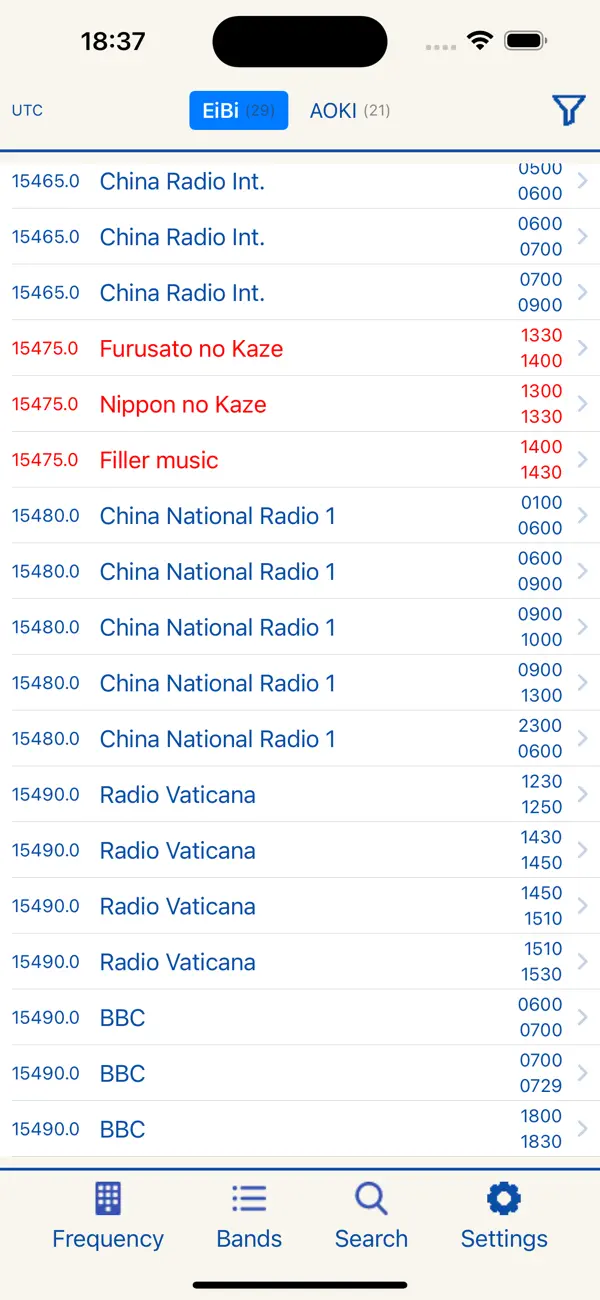
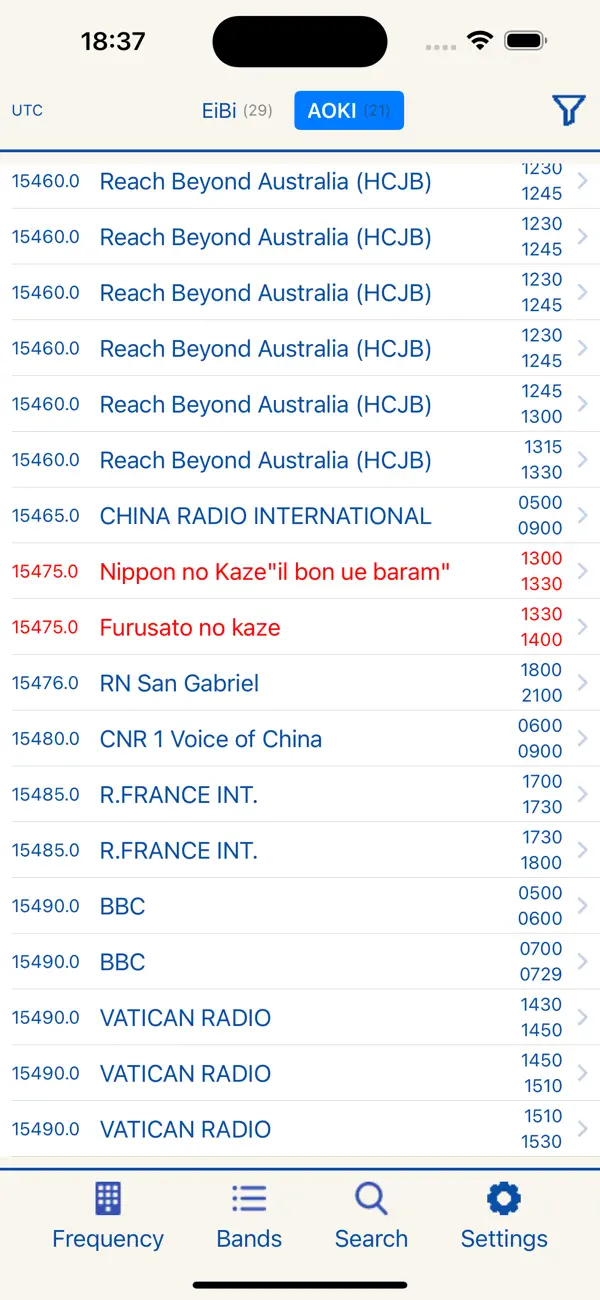
SWList gives you access to the popular EiBi and Aoki lists, helping you easily discover and identify shortwave radio stations.
The EiBi list, curated by Eike Bierwirth, is a highly valued resource within the SWL community.
The Aoki list, curated by Shigenori Aoki, is also widely used and recognized for its reliability.
SWList offers four convenient ways to explore radio stations:
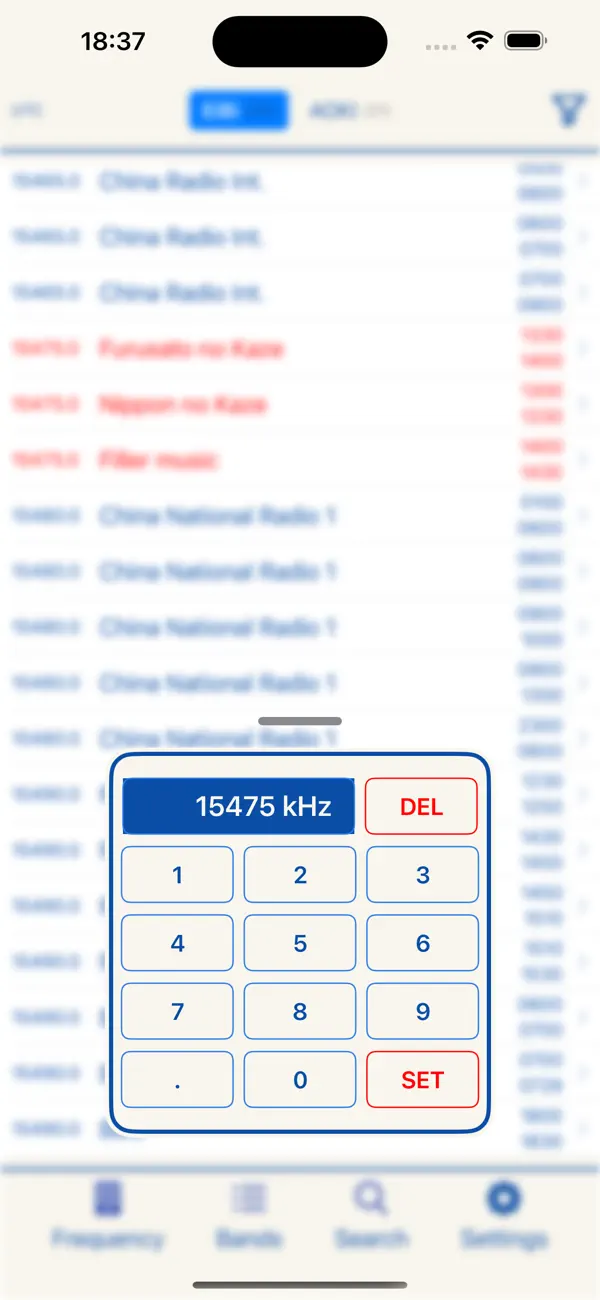
- Enter a listening frequency to display stations transmitting nearby.
- Select a specific radio band to view all stations within it.
- Search by station name, country, or broadcast language.
- Retrieve the frequency manually or automatically from your radio receiver, if connected via Hamlib.
You can also filter results to show only stations that are currently broadcasting.
For each station, detailed information is available, including transmission location, target area, and spoken language.
If the transmitter’s location is available, you can display it on a geographic map and calculate the distance from your location.
SWList also supports light and dark modes to suit your viewing preferences.
Quoi de neuf dans la dernière version ?
New: Propagation & Space Weather
Know the band conditions before you tune. SWList now includes a built-in space-weather dashboard built for shortwave listeners.
At-a-glance summary bar on the main screen showing the current HF outlook, solar flux and K-index — tap it to open the full dashboard.
Complete solar & geomagnetic picture: Solar Flux (SFI), sunspot number, A- and K-index, X-ray level, solar wind, MUF, aurora and more.
Day & night band conditions for the 80–10 m range, so you can see at a glance which bands are open right now.
Plain-language explanations: tap any value to learn what it means and how it affects propagation — great for newcomers.
Optimized for iPhone and iPad, with a layout that adapts to your screen.
Prefer a cleaner home screen? Hide the summary bar in Settings; you can still open the dashboard anytime from the Space Wx button.
Where the data comes from
Propagation data is delivered through our own dedicated server, which collects and caches readings from trusted public sources for fast, reliable access — with thanks to HamQSL.com (N0NBH) and NOAA Space Weather Prediction Center (SWPC).