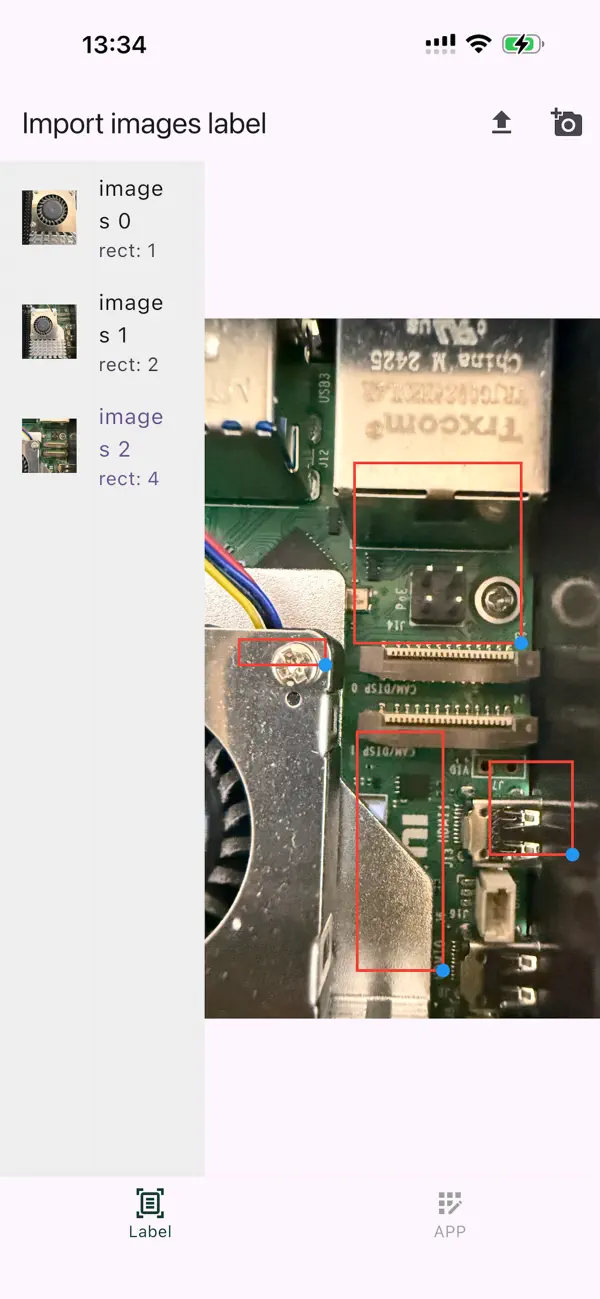
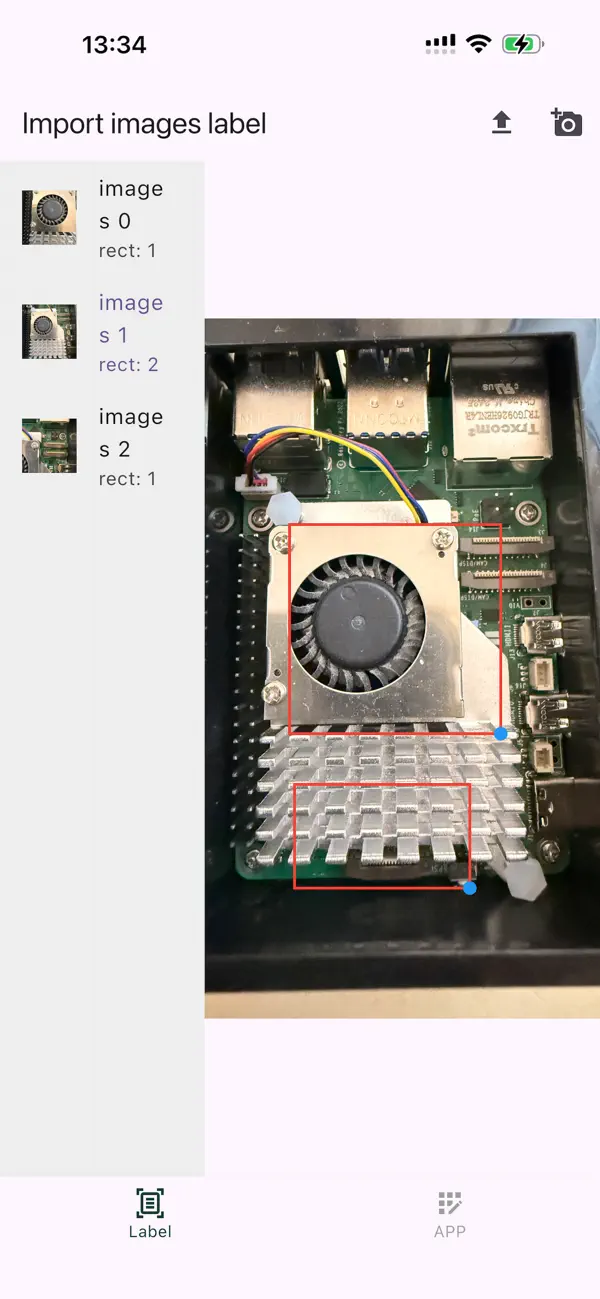
AILabel-yolo data train AI标注
iOS Universel / Productivité
AI 标注训练
Machine Part Defect Analysis
The analysis covers several defect types, including: Scratches, Bubbles, Missing Material, Cracks, and Deformation.
To train a PyTorch model, the defective areas must be annotated. The annotation tool should support the following workflow:
Batch Import: Ability to import defect images in bulk.
Bounding Box Annotation: Click and drag to create rectangular boxes over defects, with support for stretching and repositioning.
Multi-labeling: Support for marking multiple defect locations within a single image.
Export Format
The final output should be a yolo_data.zip file. Once extracted, the directory structure must strictly follow the YOLOv8 training requirements:
By inputting this folder path into a PyTorch-based training script, a specialized model can be trained for automated defect analysis.
机器零件缺陷分析。包括划痕 、气泡、 缺料、 裂纹 、变形。
需要把有缺陷的部分标注出来给PyTorch训练。
这个工具可以批量导入缺陷图片,在图片上面按住拖动出矩形,拉伸、拖动。
把有缺陷的位置标注出来,可以标注多个地方。
最后导出以下格式
导出后的 yolo_data.zip 解压后结构如下,直接符合 YOLOv8 训练要求:
把这个文件夹路径输入到PyTorch就可以训练出一个模型用于缺陷分析。
機械部品の欠陥分析
対象となる欠陥の種類:スクラッチ(傷)、気泡、欠肉(材料不足)、亀裂(クラック)、変形。
PyTorchでの学習用に、欠陥箇所のアノテーション(ラベル付け)を行う必要があります。使用するツールは以下の機能を備えている必要があります:
一括インポート: 欠陥画像をまとめて読み込む機能。
矩形アノテーション: 画像上でドラッグして矩形(バウンディングボックス)を作成し、伸縮や移動ができること。
複数箇所の指定: 1枚の画像内に複数の欠陥箇所をアノテーションできること。
エクスポート形式
出力される yolo_data.zip を解凍した際の構造は、以下の通り YOLOv8 の学習要件に直接準拠している必要があります:
このフォルダパスを PyTorch に読み込ませることで、欠陥分析用の学習モデルを構築することが可能です。